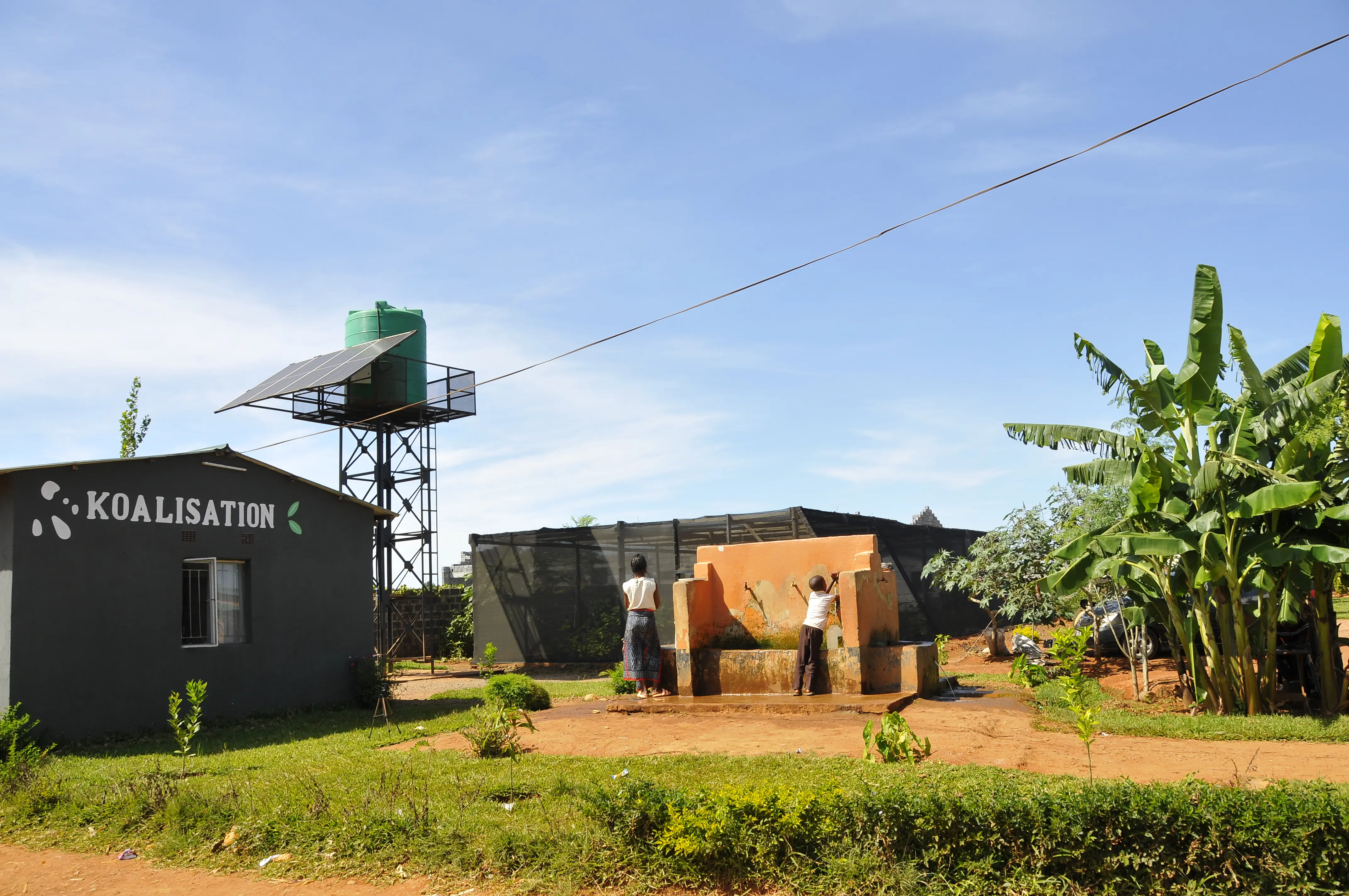
In Zambia, beneath the surface, there is water for everyone.
The problem is not finding it. It is bringing it to the surface without relying on an unstable electricity grid, on diesel, or on seasonal variability.
In contexts like Sub-Saharan Africa, the difference between subsistence and development is not the resource itself: it is the infrastructure capable of managing it.
This is where the Solar Water Tower stops being just a technology and becomes a lever for real change.
The problem isn’t where you think: the paradox of the “water-energy nexus”
We are led to believe that Africa’s water crisis is a matter of geological scarcity. The technical reality is different.
The problem lies in the water energy nexus.
There is a vast amount of resource in the subsurface in Zambia an estimated renewable groundwater potential of 49,6 cubic kilometers but what is missing is the “fuel” to bring it to the surface.
In rural areas, this translates into near-zero productive efficiency: communities remain confined to the bottom of the “water ladder” because energy (whether electric or fossil-based) is unstable or costly.
The real barrier to development, therefore, is energy poverty, which makes water inaccessible.
Zambia: the technical mirror of a continent
Zambia represents the perfect case study for understanding the need for ESG governance applied to infrastructure. The country holds 40% of the water resources of the entire SADC region (Southern African Development Community) and has ambitious targets: the National Rural Water Supply and Sanitation Programme (NRWSSP) aims for universal access by 2030. However, the system is under strain.
Dependence on hydropower has been crippled by recurring droughts linked to climate change, drastically reducing national energy output.
In this context, the Solar Water Tower is not an alternative, but the only solution capable of ensuring operational continuity.
The evolution of the solution: from the hand pump to the solar water tower
The solutions adopted so far have proven to be only partial: small household solar kits do not scale economically, while large centralized systems require prohibitive timelines and maintenance costs.
The Solar Water Tower operates as an integrated ecosystem:
Energy Conversion: It transforms solar radiation into potential energy. Water is pumped into elevated towers during peak sunlight hours, ensuring 24/7 availability and pressure through gravity, while eliminating diesel operating costs.
Asset Management: Unlike manual well point sources, the tower enables a capillary piped distribution system, reducing water collection time to under 30 minutes (a critical benchmark for defining “Basic Water Service” according to the WHO).
ESG Integration: The infrastructure becomes a shared management hub that increases the social value of the territory, improving health and productivity indicators.
The Koalisation case study: real impact at the heart of Mapalo
Water infrastructure is never just an engineering work: it is the core around which a rural community develops.
In the heart of Mapalo, Zambia, Koalisation’s Solar Water Tower represents a vital ecosystem.
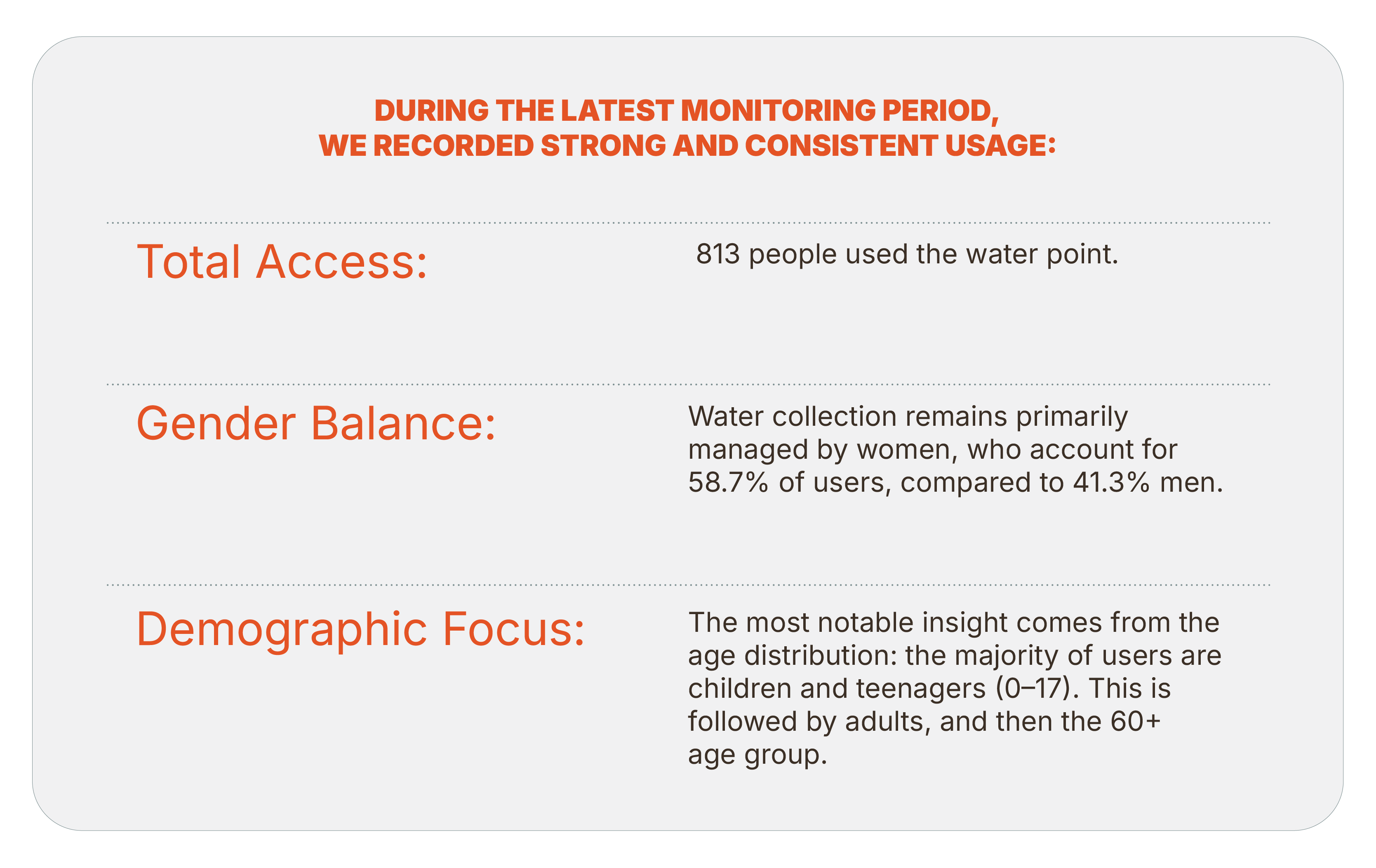
We analyzed weekly usage data to measure its impact.
The three pillars of impact
The effectiveness of the Solar Water Tower in Mapalo unfolds along three fundamental pillars:
Public health and prevention: before installation, the population relied on contaminated sources.
Today, safe water acts as a preventive barrier against typhoid and cholera, drastically reducing pressure on the local healthcare system, especially during the rainy season.Empowerment of women and girls: data on female water collection confirms that the tower has significantly reduced the time spent on water access. This translates into more time for education and the development of micro-entrepreneurial activities.
Food security and agricultural resilience: water is not only for consumption.
In Mapalo, the stability of the resource improves hygiene in food preparation and supports small-scale household agriculture, enabling the community to withstand periods of drought and ensuring food stability.
Change flows from here
The Solar Water Tower is infrastructure that works now, for those who need it now. A radical change for an entire community.
We are rewriting the rules of the future by acting on three fundamental pillars: reclaimed time, clean energy, and guaranteed health.
This is how we measure resilience, drop by drop.