In public discourse, the slogan “Save the bees” has become a mantra of sustainability.
The common narrative makes a fundamental mistake: it conflates the management of a domesticated animal with the conservation of biodiversity. But if we truly want to protect ecosystems and our food security, we need to shift our focus from the hive to wild habitats.
Domesticated Bees vs Wild Bees: a matter of “Livestock”
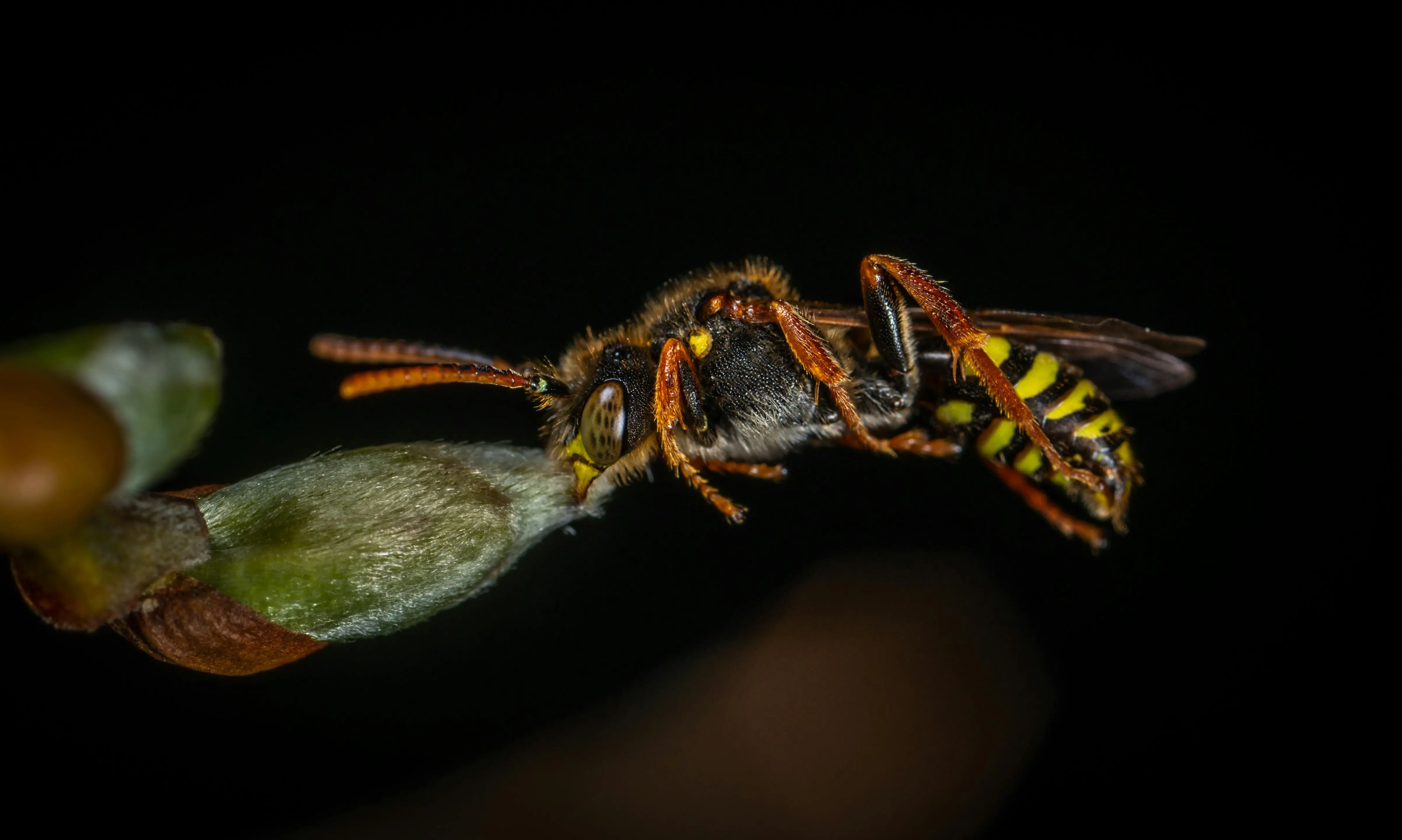
The first uncomfortable truth is that the honeybee is, in every sense, a domesticated animal. While the honeybee is a single species managed by humans, there are over 20,000 species of wild bees worldwide (around 4,000 in the United States alone and 750 in Central Europe).
The difference is not just numerical, but also lies in:
Lifestyle: 90% of wild bees are solitary and nest in the ground, wood, or plant stems, unlike the social colonies found in managed hives.
Efficiency: Wild bees are often considered superior pollinators.
For example, pollinating one hectare of land requires only a few hundred females of the mason bee "Osmia cornuta", a task that would require tens of thousands of domesticated honeybees.Resilience: Many wild species can fly in low temperatures or poor light conditions situations that honeybees tend to avoid.
The competition paradox: the Giannutri Effect
A clear and emblematic case study is that of the island of Giannutri, in Tuscany.
Research conducted by the Universities of Florence and Pisa has identified a critical phenomenon: the introduction of managed hives meaning domesticated bees raised by humans can negatively impact wild bee populations. In a confined environment such as an island, where floral resources are by definition limited and finite, the arrival of large, highly efficient colonies in collecting nectar and pollen creates intense competition.
As a result, wild bees less competitive and often more specialized struggle to access food resources and may experience a sharp population decline, with reductions of up to 80% observed, posing a real risk of local extinction.
There is also an additional critical factor: managed hives can act as true “Trojan horses” from a health perspective. Domesticated bees can carry pathogens, parasites, and viruses which, although sometimes tolerated within managed colonies, can be highly harmful to wild species that have not developed the same defenses.
In this way, alongside competition for food, an additional biological pressure is introduced, which can further accelerate the decline of native populations.
Why the honeybee is not at risk of extinction?
Contrary to popular perception, the honeybee is not globally threatened.
Despite local challenges faced by beekeepers, the number of hives worldwide has increased significantly since the 1960s.
The real alarm concerns wild species:
In Europe, around 9.2% of wild bee species are threatened with extinction.
In the United Kingdom, some populations have declined by 52%.
Biodiversity loss is driven by a lethal combination of habitat loss (due to monocultures and urbanization), pesticides (such as neonicotinoids, which impair immune systems and navigation), and climate change, which causes timing mismatches between flowering periods and insect emergence.
The numbers that matter: our food depends on them
The economic and biological impact of this crisis is immense:
Food security: 75% of the world’s main crops depend, to some extent, on animal pollination.
Economy: The global value of pollination services is estimated at around €153 billion per year.
Biodiversity: Wild bees pollinate 80% of wild flowering plants, ensuring the health of entire ecosystems.
Protecting bees today means, first and foremost, reducing the use of pesticides and promoting organic farming models that foster greater biodiversity and help restore essential habitats for pollinators, allowing them to feed and move safely.
Above all, it means understanding that diversity not quantity is our only true insurance for the future.