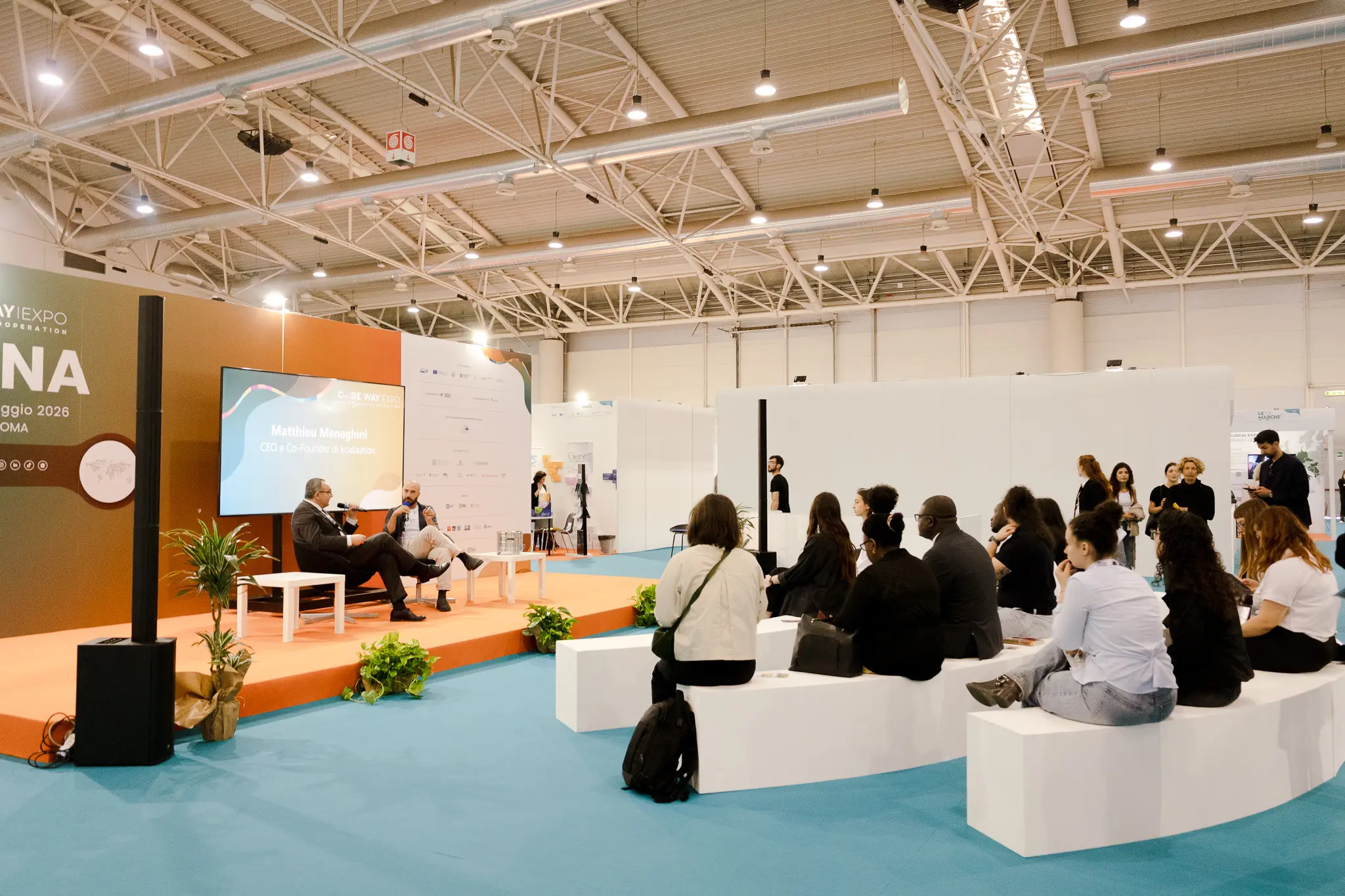
There are trade fairs where you simply occupy a stand. And then there are those where you realize you are exactly where you belong.
Codeway Expo was the latter.
Three days in Rome, from May 13 to 15, at Fiera Roma. Italy’s leading platform dedicated to international development cooperation, bringing together institutions, NGOs, companies, embassies, and international organizations under one roof, united by a common goal: not simply to exchange handshakes, but to understand how to work together in a meaningful and effective way.
Day 1 | Wednesday, May 13: Between Institutions and Inspiration
The morning of May 13 opened with a clear signal: an institutional session featuring Deputy Ministers, presidents of major industry associations, and leading players from Italy’s agri-food sector. It quickly became evident that this was far more than a niche event.
In the afternoon, the focus shifted to an operational panel on the role of the private sector in development cooperation: financing mechanisms, funding opportunities, and digital ecosystems for measuring impact. Practical discussions, grounded in real numbers and tangible solutions.
For us, it felt almost like a roadmap, a blank canvas on which the partnerships and alliances we hope to build were beginning to take shape.
Day 2 | Thursday, May 14: Our Turn to Speak
The 14th of May was our day.
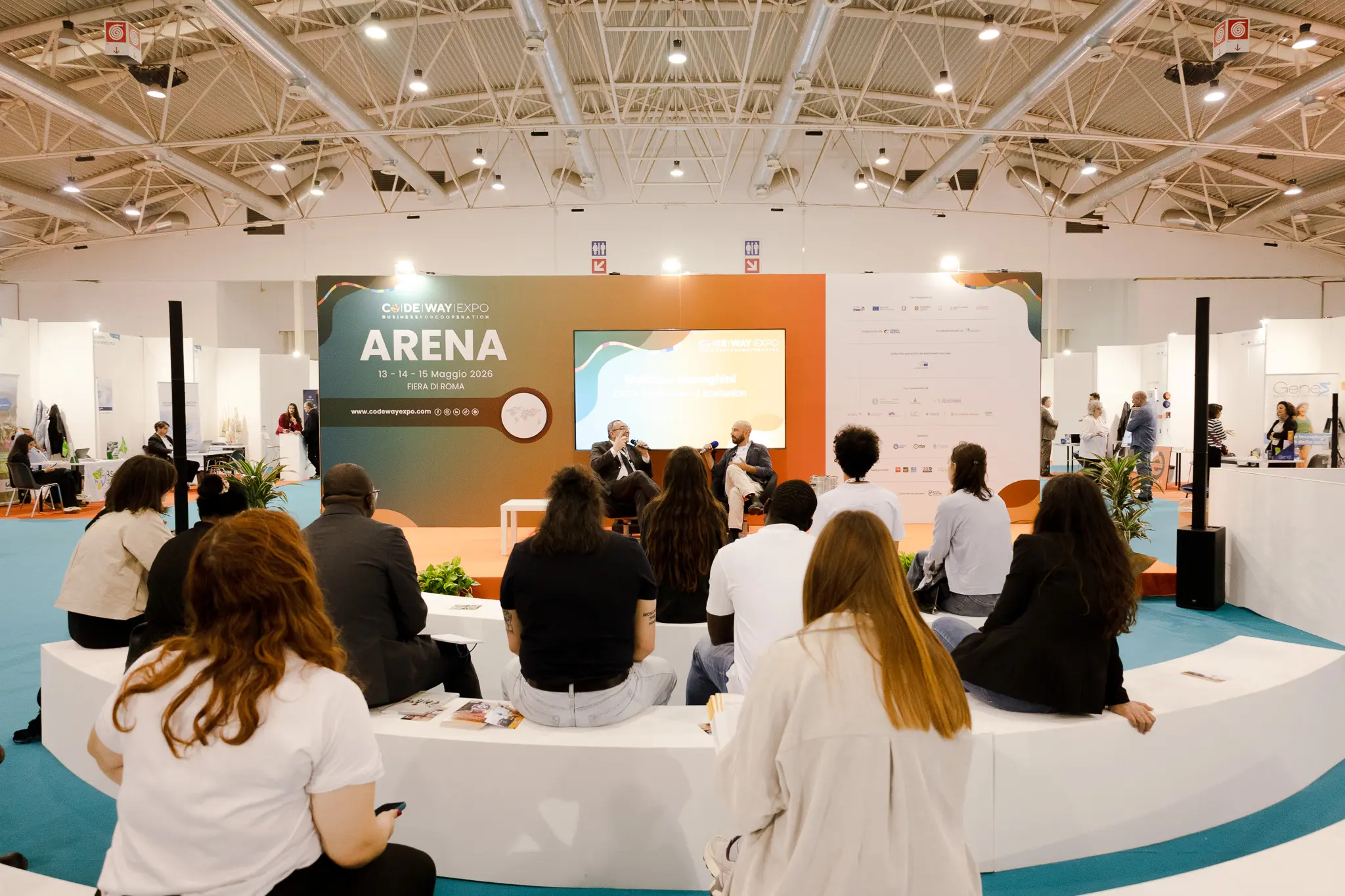
At the Codeway Arena, we hosted a panel with a title that left no room for ambiguity:
“From a Fuel That Was Destroying the Future to One That Nourishes It: Is It Possible? Koalisation Answers.”
The answer, of course, is yes.
But getting there means telling a story that begins in Zambia, within communities that rely on charcoal for cooking, breathe toxic smoke every day, and depend on a resource that drives deforestation and reaches all the way here, through a business model that proves it is possible to create economic value while generating measurable, lasting impact.
We spoke about clean cooking, agroforestry, carbon credits, and local communities. About how every Koalisation project is not an exercise in greenwashing, but part of a measurable, certified, and transparent system designed to deliver real results.
We also spoke about honey, as the symbol of a value chain that genuinely works.
The audience was exactly the right one: curious, diverse, and made up of people from different worlds companies, institutions, and NGOs, all connected by the same common thread: understanding how to create value that lasts over time
Day 3 | Friday, May 15: Honey Reaches the FAO and Beyond…
On the morning of May 15, the Plenary Stage hosted one of the most significant moments of the entire event: a session dedicated to the Italy–FAO partnership and the achievements of the Food Coalition.
The speakers included some of the most influential voices in the sector from the FAO and the Italian Ministry of Foreign Affairs and International Cooperation (MAECI) to Maurizio Martina, FAO Deputy Director-General, who closed the session with a clear call to action: local food systems are not a romantic utopia. They are one of the next great challenges and opportunities of international development cooperation.
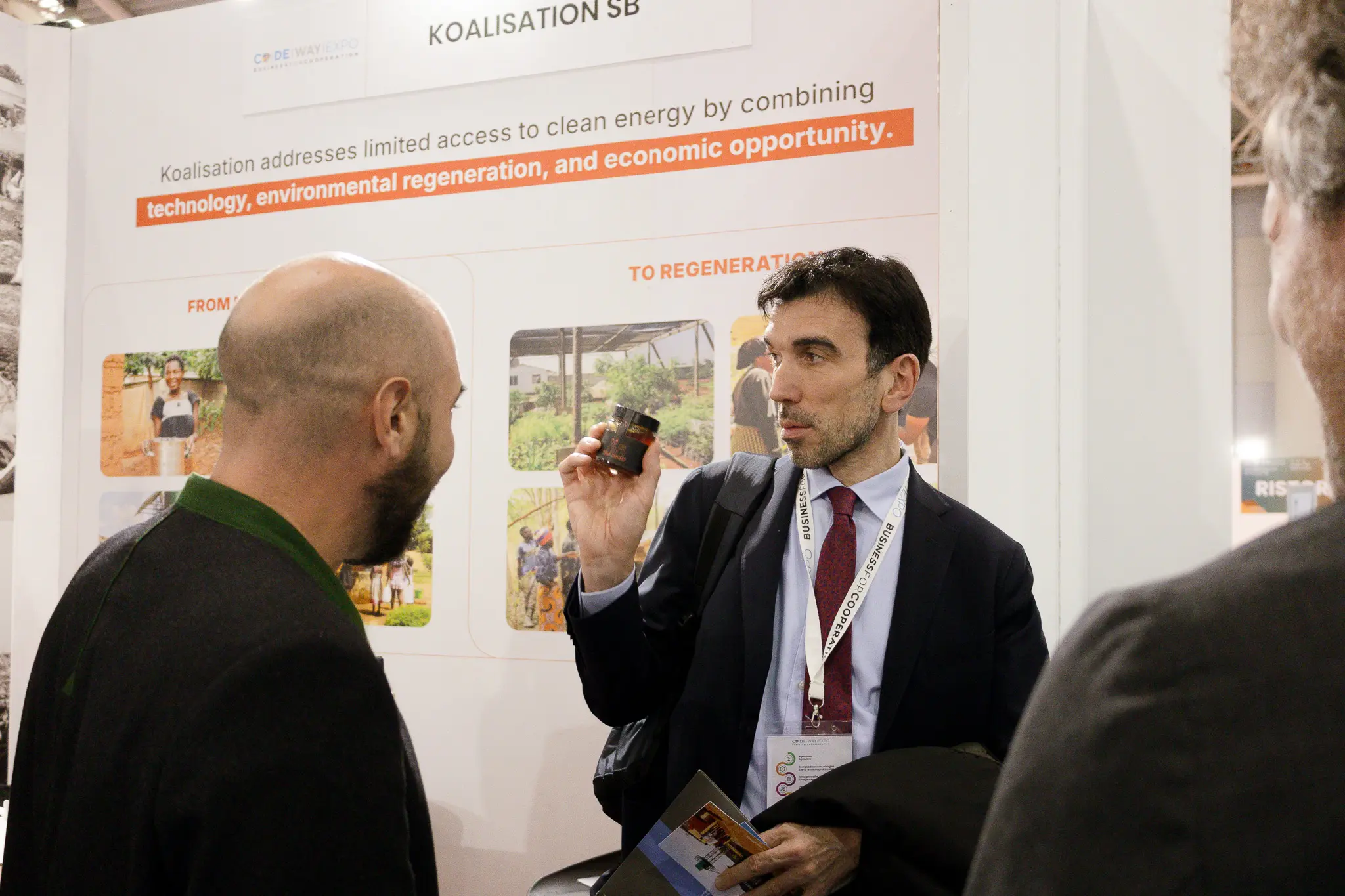
Shortly after the panel, Maurizio Martina stopped by our stand.
He tasted the honey and listened to the story behind it: what it means for the communities that produce it, how it fits into a broader system of environmental regeneration and local development, of clean cooking solutions, and of communities that are not passive recipients of aid, but active participants in a model that generates measurable impact.
There are moments when you realize that the work you do when communicated well and shared in the right place truly resonates.
That was one of those moments.
So, what are we taking home?
Over the course of three days, we met representatives from the FAO, the UNOPS Rome Liaison Office, the World Food Programme, and the Embassy of Zambia in Italy. We also connected with companies, NGOs, embassies, startups, and researchers.
Every conversation opened a door. Some of those doors, we are already beginning to walk through.
We left with tired legs, minds full of ideas, and one stronger conviction: the world of international development cooperation is not separate from business. In truth, it never has been it simply wasn't something people said out loud.
We say it openly.
And that is exactly why we were there.