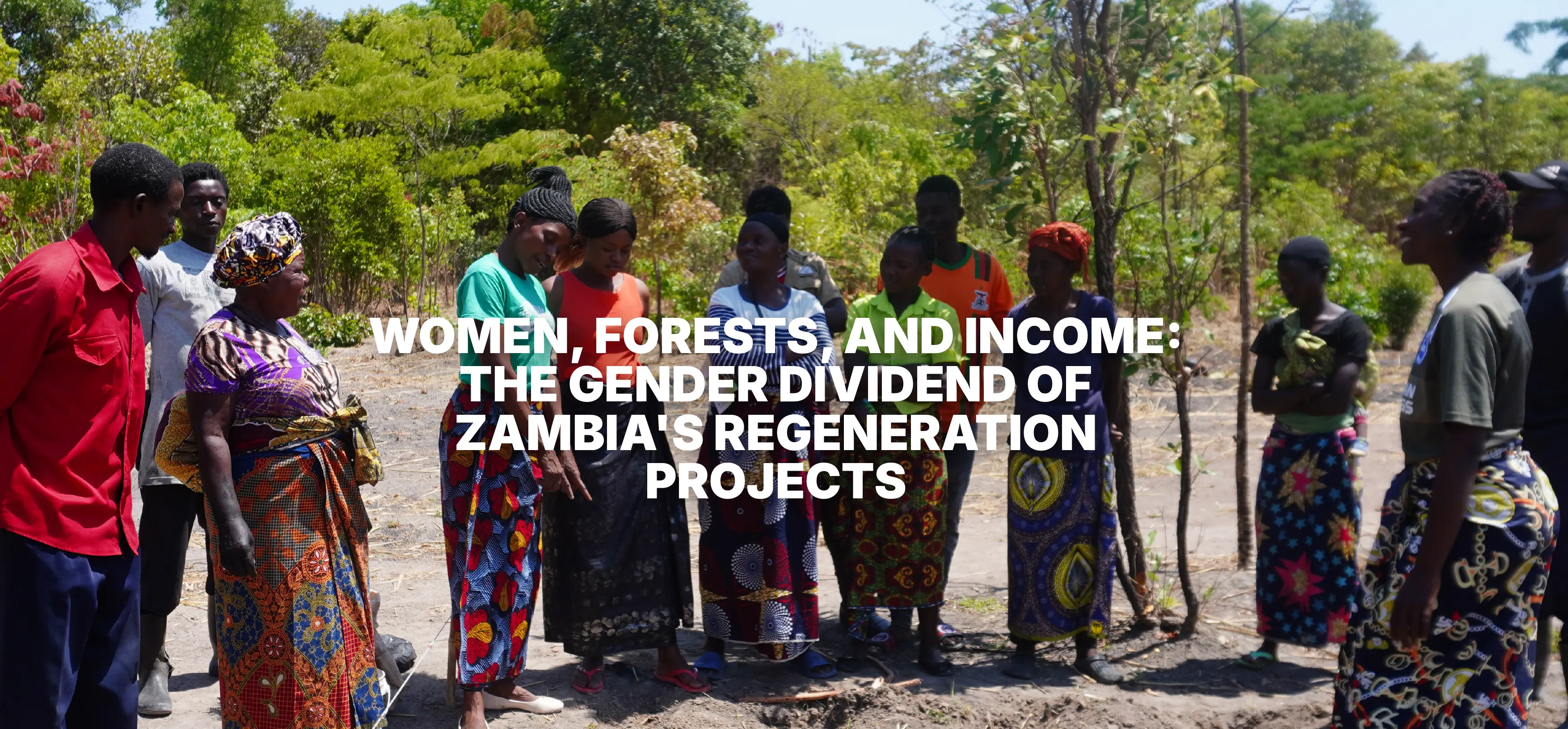
In Sub-Saharan Africa, 66% of employed women work in the agri-food sector, according to FAO data. They cultivate, harvest, and manage forest resources on a daily basis.
They control only a marginal share of the land they work on.
This isn't an isolated case, but a pattern that repeats across nearly all forest regeneration projects on the continent.
Gender dividend: the data point that changes the calculation
The CGIAR Flagship Report 2025, citing FAO data, is clear: if women had the same access to productive resources as men, agricultural yields would increase by 20–30%. CIFOR-ICRAF reaches the same conclusion looking at Forest Landscape Restoration projects: where women participate in design and management, outcomes improve : biodiversity, carbon sequestration, and the project's durability over time.
This isn't a matter of equity. It's a matter of efficiency.
0.01%: the paradox of climate finance
According to the World Economic Forum, only 0.01% of global climate finance funds projects that integrate climate action with women's empowerment.
GIZ analyzed why: carbon markets require legal certainty over property titles in order to issue verifiable credits. A technical requirement that, in practice, excludes those who have never had access to formal land ownership, in most cases, women.
UN Women Africa has published a toolkit for integrating gender into climate policies, a sign that the issue is entering the institutional agenda, still lagging behind the available evidence
Forest regeneration in Zambia
Reforms in Zambia's forestry sector are underway. The Global Land Alliance analyzed the 2015 Forest Act and found a specific gap: the law does not include binding gender criteria for access to and management of forest resources.
Data from UN Women on Zambia confirms the same picture: women's underrepresentation in decision-making roles is directly reflected in natural resource governance.
Why the gender dividend matters
A project that doesn't include women in governance and benefit distribution isn't just less equitable. It absorbs less carbon. It generates less stable income. It stalls once international funding runs out.
We work in Zambia's territories on forest regeneration projects and value chains like beekeeping. It's in this work, not in a stated principle, that we measure the difference that including women in design makes.